Brief Description:
This session explores the integration mechanisms between large language models (LLMs) and the modeling of core disciplinary competencies—such as scientific reasoning, engineering design, and computational thinking—from a computational cognitive science perspective. It aims to investigate how LLMs can formally represent these higher-order skills and enable dynamic learner profiling, real-time assessment, and predictive analysis to support personalized science and technology learning.This topic focuses on the development of interactive, adaptive learning ecosystems that blend LLMs with simulation tools, virtual labs, and semantic knowledge graphs. It aims to build context-rich environments that scaffold students’ progression from conceptual understanding to applied inquiry and experimentation, promoting self-directed exploration and authentic problem-solving in science and technology contexts.The implementation of LLMs at the K–12 level presents unique opportunities and challenges, particularly in aligning system design with the cognitive characteristics of younger learners. This session highlights how LLMs can be meaningfully integrated into classroom practices through thoughtful instructional design, teacher facilitation, and pedagogical scaffolding—transforming LLMs into safe, trustworthy, and developmentally appropriate learning companions in primary and secondary science and technology education.
Session Organizers
Assoc. Prof. Guangtao Xu, Hangzhou Normal University, China
Assoc. Prof. Liu Xinyang, Shandong Normal University, China
The topics of interest include, but are not limited to:
▪ Integrating Large
Language Models with Competency Modeling in
Science and Technology Education
▪ Designing Adaptive and Context-Aware
Learning Environments Empowered by LLMs
▪ Applying Large Language Models in K–12
Science and Technology Education
Submission Method
Submit your Full Paper
(no less than 4 pages with two colums) or
your paper abstract-without publication
(200-400 words) via
Online Submission
System, then choose Special Session 4 (Large Language Model–Driven Innovation in Science and Technology Education)
Template
Download
Introduction of Session Organizer
 Assoc. Prof. Guangtao Xu
Hangzhou Normal University, China
Bio: Dr. Guangtao Xu is an Associate Professor, Master’s
Supervisor, and Director of the Department of Educational Technology
at Jinghengyi School of Education, Hangzhou Normal University. He
also serves as a Research Fellow at the Institute for Educational
Modernization.His primary research interests include Artificial
Intelligence in Education, Learning Sciences, and Technological
Design for Learning. He has published over 50 academic papers and
authored two books. Dr. Xu has received more than 20 teaching and
research awards at various levels. He is the lead instructor of a
national-level first-class course and has guided students to win
over 50 national and provincial awards, including in the "Challenge
Cup" and National Computer Design Competition.He has led
sub-projects under China's National Key R&D Program and projects
under the National Education Science Planning. In 2014, he was
awarded the Second Prize of the Zhejiang Provincial Science and
Technology Progress Award. In 2021, he received the Second Prize of
the National Education Science Outstanding Research Achievement
Award, and in 2025, the Second Prize of the Zhejiang Provincial
Basic Education Teaching Achievement Award.
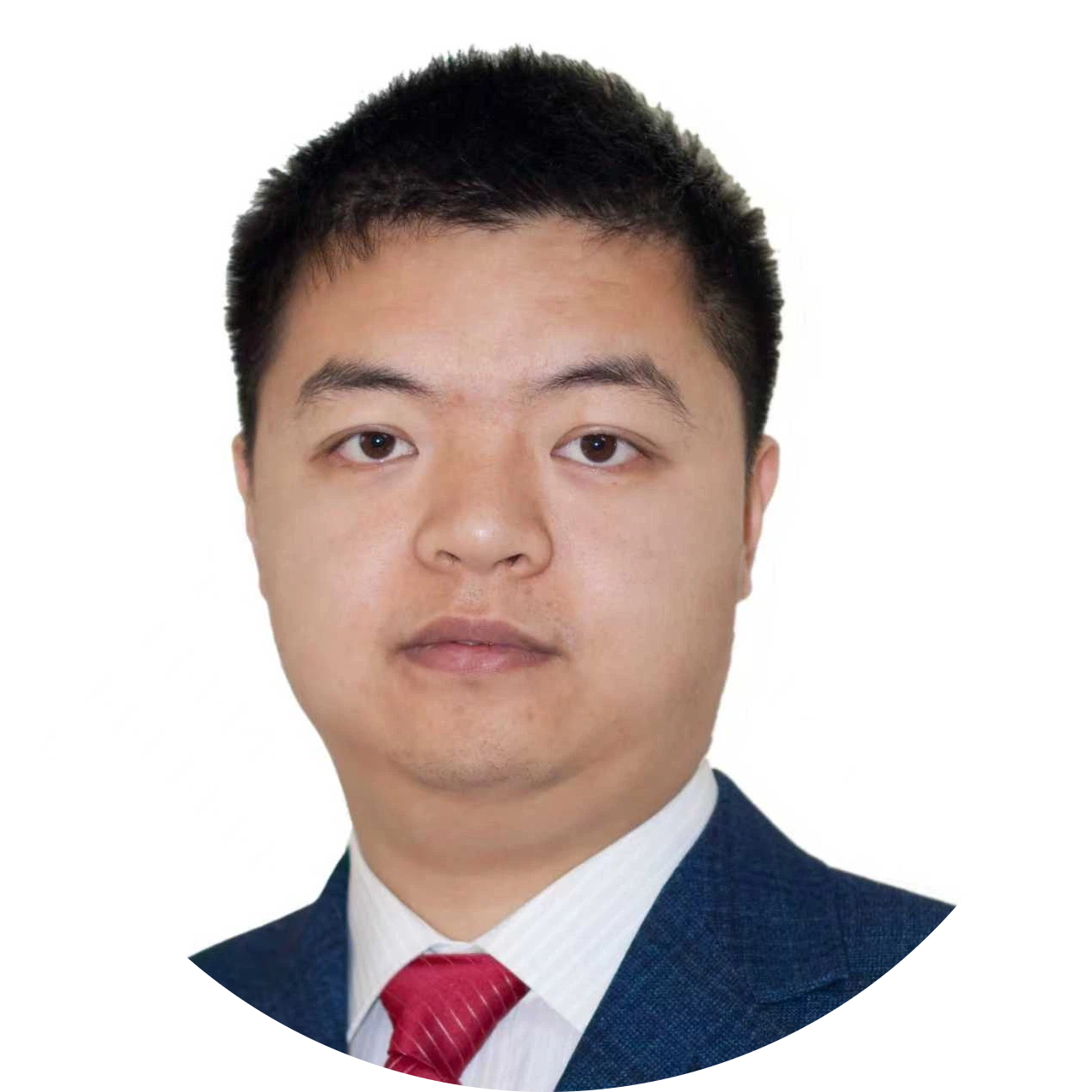 Assoc. Prof. Liu Xinyang
Hangzhou Normal University, China
Bio: Dr. Liu Xinyang is an Associate Professor and Master’s
Supervisor in the Faculty of Education at Shandong Normal
University, and concurrently serves as a Director of the Learning
Science Research Branch of the Chinese Higher Education Association.
He earned his doctoral degree from the Learning Sciences Center,
East China Normal University. His core research focuses on three
interconnected domains: science education, instructional design, and
teachers' professional development. Drawing on extensive experience
conducting school-based empirical research in primary and secondary
educational settings, he excels in fostering and leading teachers'
professional practice communities, and provides targeted support to
address practical pain points in teachers’ instructional practice.
He has published more than 20 peer-reviewed papers in fields
including educational technology, instructional design, key
competencies, STEM education, and classroom research, has led or
contributed to 5 national and provincial-ministerial level research
projects, and authored two monographs: A Study on Teachers'
Instructional Design Competence: Theories, Methods and Cases and
Scientific Practices in Science Education.